Online slots: how RTP, volatility and bankroll actually fit together
Slots look simple and are described badly almost everywhere. This guide covers the four numbers that describe any slot, where to find them inside the game, and how to pick one that matches the money you have set aside.
 By TK666 Guide Editorial Team · Updated
Reading the information panel
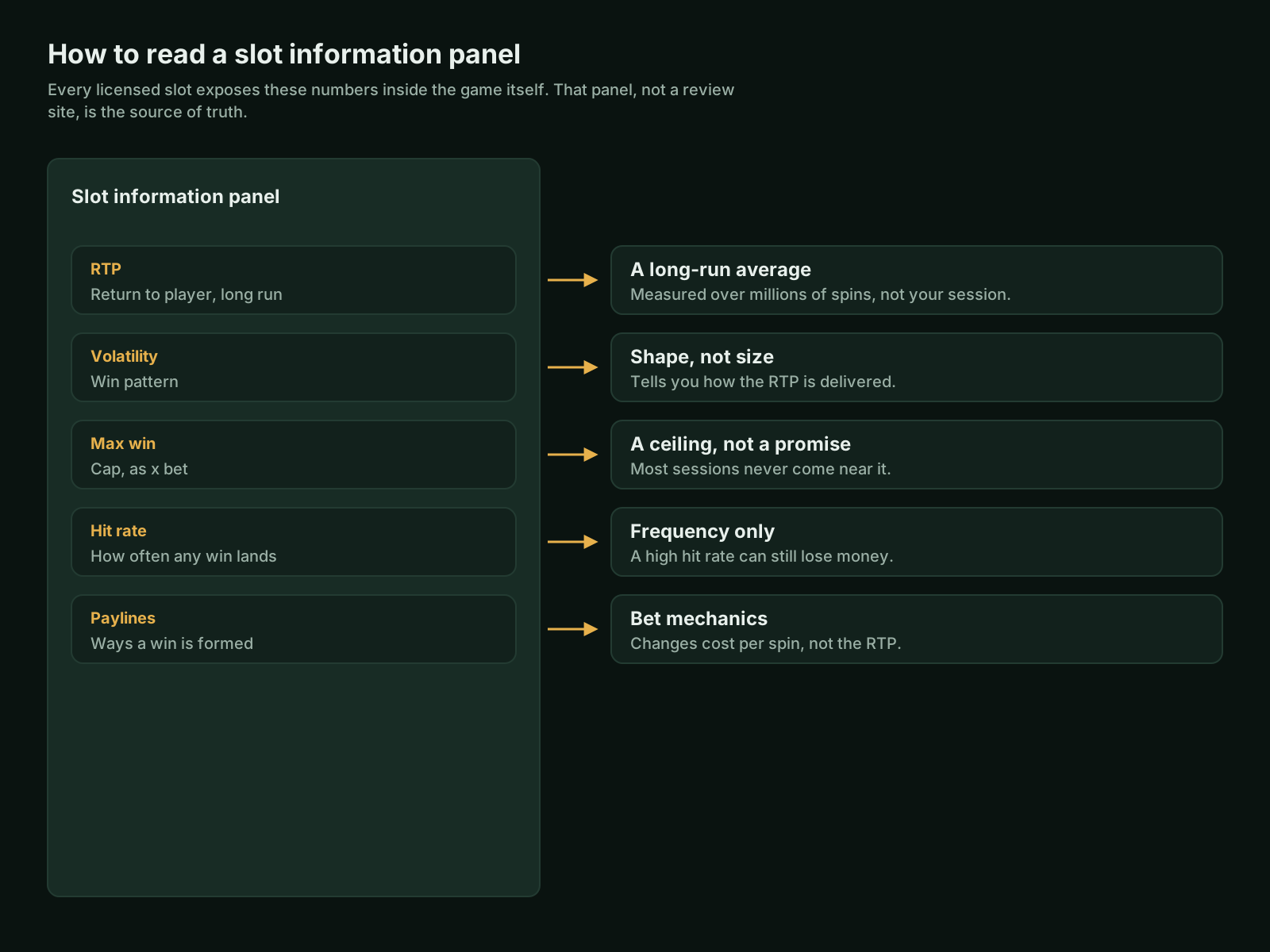
Four numbers describe a slot, and all four sit inside the game itself. Learning to read that panel is the single most useful habit in this whole guide, because it replaces every claim anyone else makes about the game.
RTP
The long-run return to player, in per cent. Treat it as the machine's specification, not as a forecast for your session. A one-point difference between two games is meaningful over thousands of spins and invisible over fifty.
Volatility
How that return is delivered: many small wins or rare large ones. Usually shown as low, medium or high, sometimes as a number from one to five.
Maximum win
The cap, expressed as a multiple of your stake. It is a ceiling, not a target, and headline figures of several thousand times the bet are reached by a vanishingly small share of players.
Hit rate
How often any win lands. Useful for understanding session texture; useless on its own for judging value, since a hit smaller than the stake is still a loss.
What a slot cannot do
Three beliefs cost more money than any of the mechanics, and all three are about memory the machine does not have.
It is not hot or cold
Outcomes come from a random number generator seeded independently each spin. Streaks are visible in hindsight and invisible in advance.
It does not remember you
Not your last session, not your losses, not how long you have played. There is no compensation logic waiting to balance your account.
The theme is decoration
Artwork, sound and animation are marketing. Two games with identical maths and different skins have identical expected returns.
Volatility and your balance
Volatility is where most disappointment starts, because two games with the same advertised RTP can behave completely differently on a small balance.
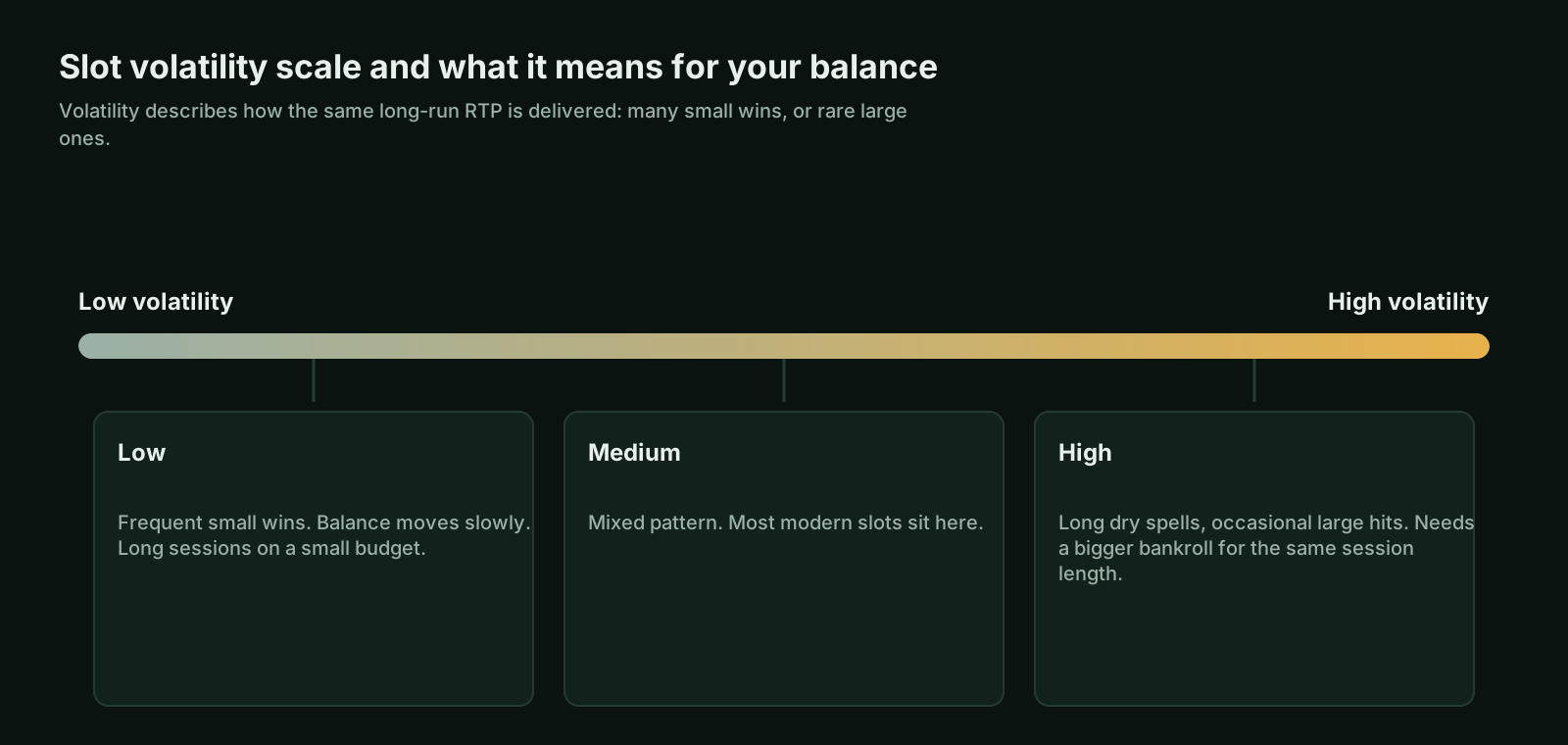
A practical way to think about it: at 500 taka and a 5 taka stake you have a hundred spins. On a low-volatility game those hundred spins will mostly drift, with frequent small returns extending the session. On a high-volatility game a hundred spins is a very small sample of a distribution built around rare events — the most likely outcome is that you see none of them.
Matching a game to your bankroll
- Decide the session budget first, in takaSet the amount you are prepared to lose entirely before you open a game. That number is the input to everything below, and it should not move once the session starts.
- Divide by the number of spins you wantA 1,000 taka budget over roughly 200 spins gives 5 taka per spin. If the game's minimum stake is higher than that, it is the wrong game for the budget, not a reason to shorten the session.
- Check volatility against that spin countUnder a couple of hundred spins, a high-volatility game is mostly downside. Low or medium volatility matches short sessions better.
- Read the maximum bet rule if a bonus is activeExceeding the per-spin cap while wagering a bonus can void the bonus and everything won with it. The cap is in the bonus terms, not in the game.
- Set the loss limit in the account, not in your headDeposit limits and session limits are enforced by the platform. Intentions are not. The responsible gaming page covers the tools worth switching on.
The practical takeaway. Read the information panel before the first spin, choose volatility to match the size of your balance rather than the size of the jackpot, and accept that no in-game decision changes the expected return. Everything else in slots is presentation.
Frequently asked questions
What does RTP actually mean?
Return to player is the share of all money staked that a game returns as prizes across millions of spins. A 96% RTP does not mean you get 96 taka back from every 100 you stake in a session; it describes the long-run average of the machine, not your afternoon.
Is RTP fixed for a slot?
Not always. Some studios ship a game in several RTP configurations and the operator chooses one. That is why the number in the game's own information panel matters more than any figure printed on a review site, including this one.
Does volatility change my chances of winning?
It changes the shape of the outcome, not the expected return. High volatility means longer losing runs and rarer, larger hits at the same RTP. On a small balance it is the difference between a session that lasts and one that ends in five minutes.
Are slots ever due for a payout?
No. Each spin is generated independently. A machine that has paid nothing for two hours has exactly the same odds on the next spin as one that just paid out.
Does buying the bonus round improve value?
It buys access to a feature at a fixed price, and studios usually rebalance the maths so the purchase carries its own RTP — often slightly different from the base game. It compresses variance into a few expensive rounds rather than removing the house edge.
What is hit rate and why is it not the main number?
Hit rate is how often any winning combination lands, including ones smaller than your stake. A slot can hit on a third of spins and still lose money steadily, because most of those hits return less than they cost.
Do bet size or autoplay affect the outcome?
No. They change how fast you spend and how large each result is, not the underlying probabilities. The only real lever you control is cost per spin multiplied by spins per hour.
Where do I find these numbers in the game?
Open the menu inside the game — usually a burger icon or an "i" — and look for the information or paytable screen. RTP, maximum win and volatility are normally on the first or last page of it.
Before you open an account
Four things worth checking first, in this order:
- The licence entry in the regulator's own register — not a badge in the site footer.
- The domain, character by character: clones of popular brands are common.
- That the wallet you deposit with is in your own name, or withdrawals will fail verification.
- The bonus terms — wagering multiplier, what it applies to, game weighting and the deadline.
The button below is an affiliate link. If you open an account through it we may be paid a commission. It costs you nothing and does not change what we write.