Sports betting odds, markets and margin, explained for Bangladeshi bettors
Odds are a way of writing a probability with a fee attached. This guide covers the three formats and how to convert between them, the markets you meet first in cricket and football, and how to work out exactly what a bookmaker is charging.
 By TK666 Guide Editorial Team · Updated
The three odds formats
Every price you will see is one of three notations for the same thing. Being able to convert between them in your head removes most of the confusion in sports betting.
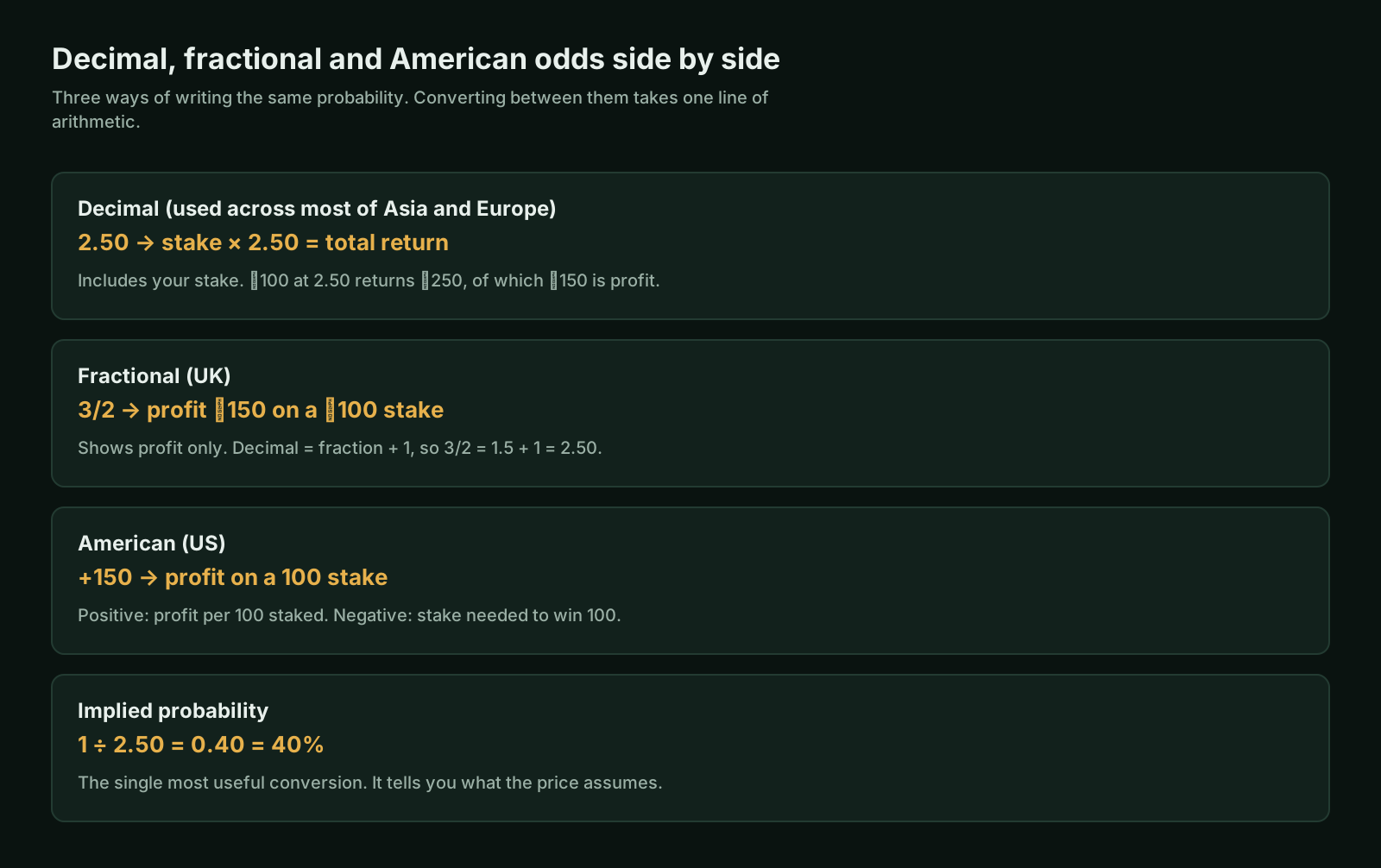
Decimal is the default across Asia and Europe, and it is the easiest: multiply the stake by the price to get the total return. Fractional odds show profit alone, so decimal equals the fraction plus one. American odds use a positive number for profit on a 100 stake and a negative number for the stake required to win 100. Converting all three to implied probability — one divided by the decimal price — is what makes two bookmakers comparable.
Markets you will meet first
Match result
Who wins. In football, the draw is a third outcome; in most cricket formats a result is guaranteed, which produces a two-way market and a tighter margin.
Totals (over/under)
Whether a total — runs, goals, points — finishes above or below a line the bookmaker sets. The line, not the sport, is what you are judging.
Handicap
One side starts with a virtual advantage so an uneven contest becomes a near-even market. Common in cricket and kabaddi, where mismatches are frequent.
Live
Prices updated during play. Faster, wider margins, and a lag between the broadcast you are watching and the feed the bookmaker uses.
Where the margin sits
A bookmaker does not need to predict results correctly to make money. It needs the sum of the implied probabilities it publishes to exceed 100%.
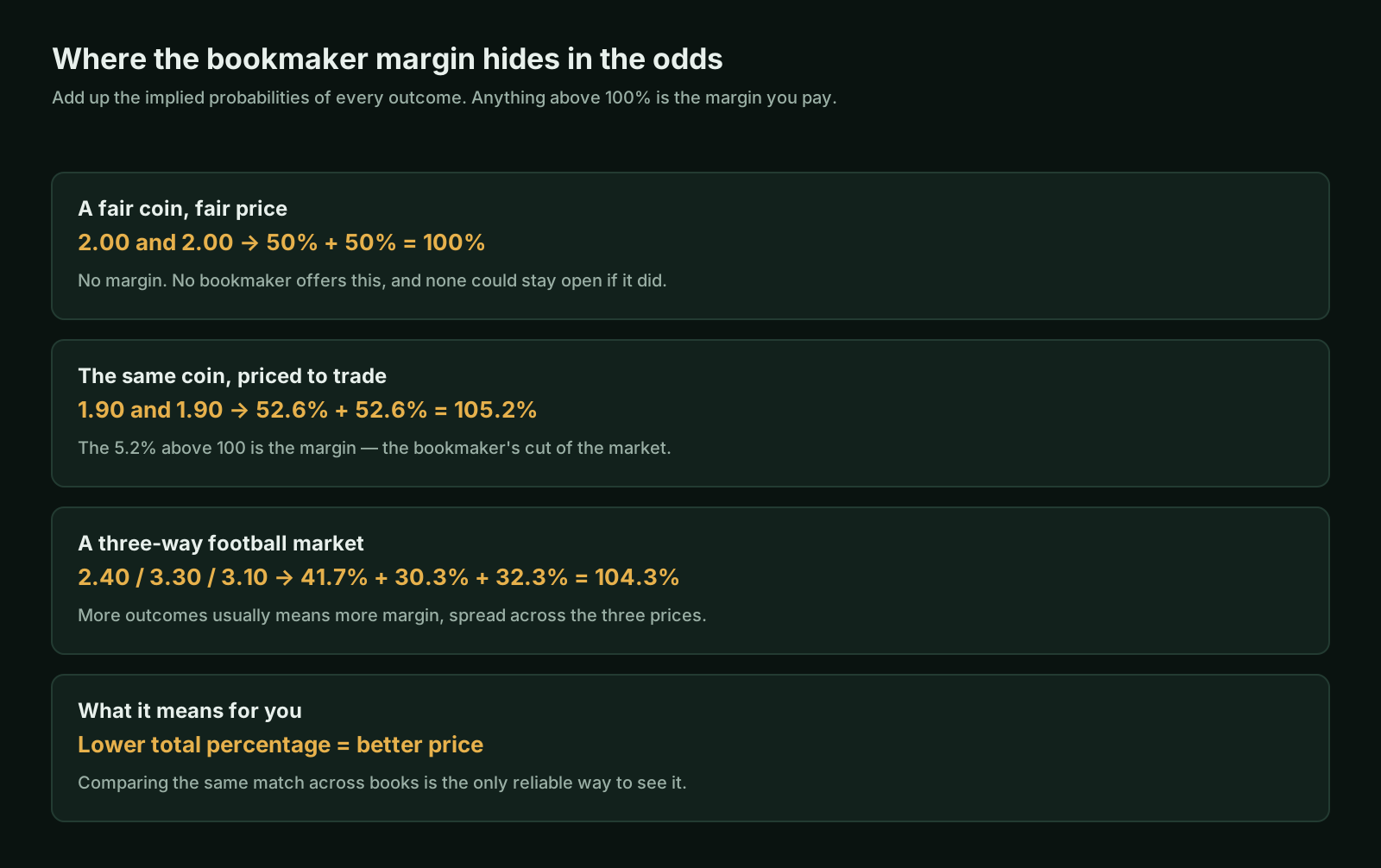
On a two-way market priced 1.90 and 1.90, each side implies 52.6%, totalling 105.2%. That 5.2% is the cost of the bet, taken whichever way it lands. Comparing the same market at two bookmakers and adding up the percentages is the only reliable way to tell which one is charging you less — headline promotions have nothing to do with it.
Cricket, football and the local calendar
Cricket dominates betting interest in Bangladesh, and the format changes the market. Twenty-over cricket produces short, volatile matches where a single over swings a price; Test cricket produces slow markets where the draw is a live outcome and weather is a genuine variable. Franchise tournaments concentrate liquidity, which usually means tighter prices than domestic fixtures.
Football markets are the deepest globally, which means tighter margins on major leagues and much wider ones on obscure fixtures. Kabaddi and esports sit at the other end: fewer bettors, less information, wider prices. A market being available does not mean it is priced competitively.
A quick habit worth keeping: before placing anything, convert the price to a probability and ask whether you would take the other side at the implied figure. If the answer is yes, the price is not telling you what you thought it was.
The practical takeaway. Convert every price to a probability, add up the market to see what you are paying, and remember that the margin is charged on every bet regardless of the result. Bet selection matters less than price selection.
Frequently asked questions
What do decimal odds of 2.50 return?
Your stake multiplied by 2.50, stake included. A 100 taka bet returns 250 taka in total: 150 profit plus your original 100.
How do I convert odds to a probability?
Divide one by the decimal price. 1 ÷ 2.50 = 0.40, so the price implies a 40% chance — before the bookmaker's margin is stripped out.
Why do the odds move after I look at them?
Two reasons: new information such as a team sheet or an injury, and the weight of money already staked. Bookmakers adjust prices to manage their exposure as much as to reflect probability.
What is the margin and how do I see it?
Add the implied probabilities of every outcome in a market. The amount above 100% is the margin. On a two-way market at 1.90 and 1.90 it is about 5.2%.
Is live betting different?
The prices move constantly and the delay between your screen and the event is longer than it looks. Live markets typically carry a wider margin than pre-match ones for that reason.
What is a handicap in cricket betting?
A run or wicket adjustment applied to one side to make an uneven contest into a roughly even market. Your bet is settled against the adjusted result, not the actual one.
Before you open an account
Four things worth checking first, in this order:
- The licence entry in the regulator's own register — not a badge in the site footer.
- The domain, character by character: clones of popular brands are common.
- That the wallet you deposit with is in your own name, or withdrawals will fail verification.
- The bonus terms — wagering multiplier, what it applies to, game weighting and the deadline.
The button below is an affiliate link. If you open an account through it we may be paid a commission. It costs you nothing and does not change what we write.